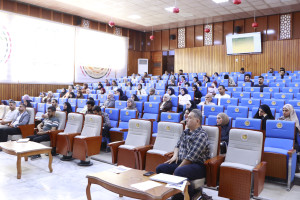
The College of Engineering has concluded its "Public & Radiation Safety Training Course," organized by the Chemical, Biological, Radiological, and Nuclear (CBRN) Safety Division for postgraduate students. The scientific and training program took place from November 22 to November 26, 2026.
The course culminated in a final examination for the participating postgraduate students, serving as the concluding phase of the training program. This assessment was designed to evaluate the students' grasp of the scientific topics and knowledge presented throughout the course, as well as their understanding of safety concepts, preventive measures, and protocols for handling various types of hazards.
The course’s scientific program featured a series of specialized lectures delivered by a group of faculty members and experts. These sessions covered a wide range of topics, including chemical, biological, radiological, and nuclear (CBRN) safety, occupational health and safety, and risk management within university and laboratory environments.
The lectures addressed subjects such as radiation and nuclear waste, radiation protection methods, waste management, occupational health and safety administration, and chemical hazards in laboratory settings. Furthermore, the curriculum covered radiation and contamination protection, biosafety management, as well as viral diseases, epidemics, and strategies for prevention and infection control. This course is organized as part of the efforts of the CBRN division to promote a culture of safety and prevention, develop the scientific and professional capabilities of postgraduate students, and enhance their awareness of potential risks—as well as the mechanisms for managing them—particularly within research and laboratory environments.
Through such activities, the College of Engineering underscores the importance of continuing specialized scientific and training programs. These programs serve as a cornerstone for building research capacity, embedding principles of safety and professional responsibility, and contributing to a secure university and research environment grounded in scientific knowledge and established professional practices
Important News


viewed most